
At For Planet Strategy Lab, we start from a simple but powerful observation: just like people have habits, organisations have routines. These routines define how work actually happens – far more than slide decks, strategy papers, or town-hall speeches. Many strategies fail not in their design, but in day-to-day work: if you don't change routines to match strategies, they will fail.
Good intentions alone don’t change behaviour
Even with the best of intentions, we often don't succeed in changing our behaviour. “This year I’ll exercise more, spend less time on screens, and eat healthier.” Sound familiar? It certainly does to us: we've had our own share of failed New Year’s resolutions – in fact, I'm writing this in January 2026 after having just eaten a burger…
Habits don’t change just because we want them to. Our brains are wired differently. Our unconscious habits undermine our conscious intentions.
From human habits to organisational routines
Just like people have habits, organisations have routines. The difference lies in scale. Whereas habits are recurring behaviours of individuals, routines are recurring patterns of teams, departments, or entire organisations.
In my PhD research on organisational routines, I analysed how these routines work and how they can be strategically used.
On the positive side, routines keep value creation running smoothly. They act as implicit scripts, enabling teams to work effectively without constant coordination.
But routines also have a downside: like habits, they are hard to change. They are stable, resilient, and often resistant to even the strongest strategic intentions.
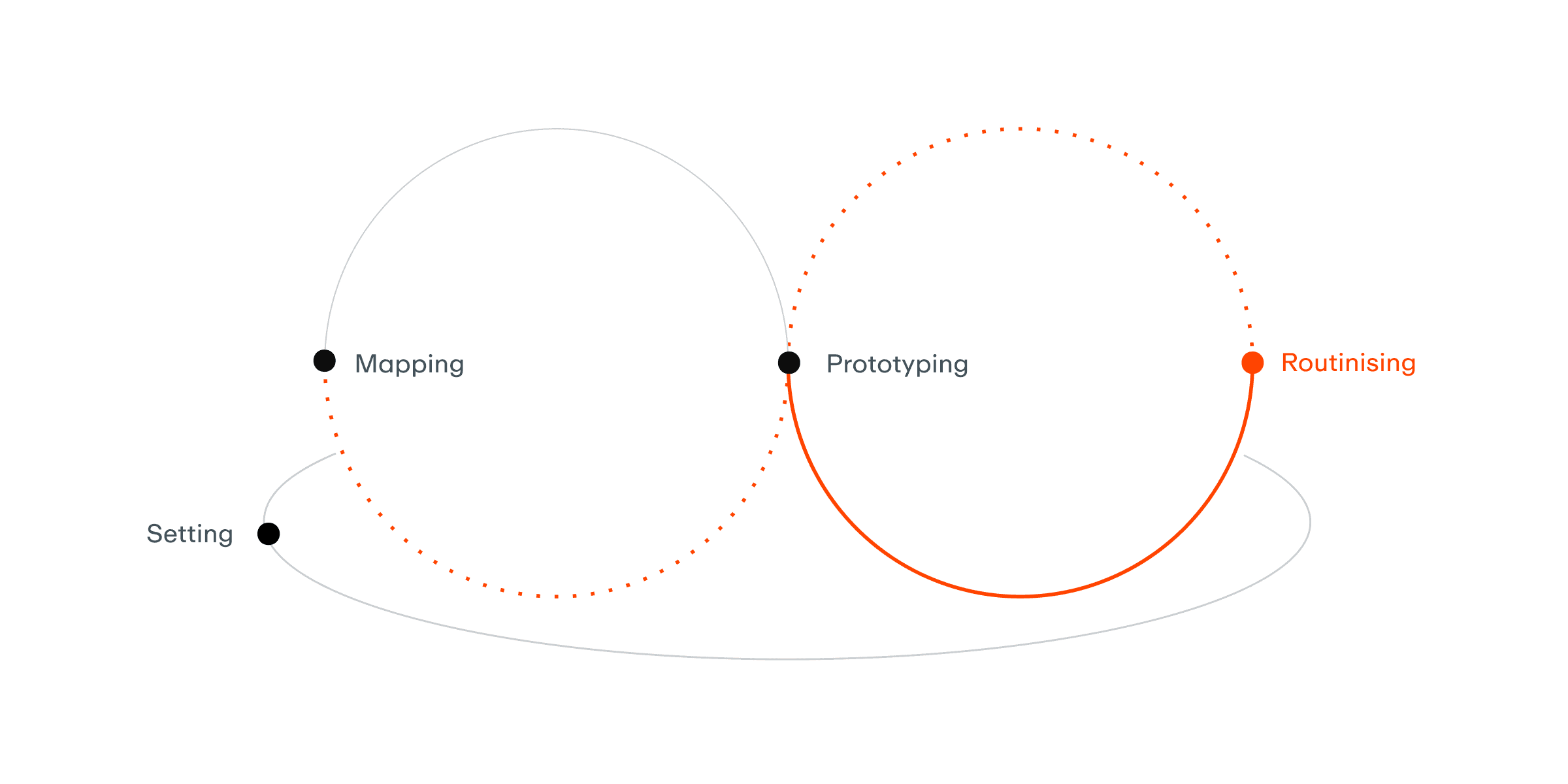
© For Planet Strategy Lab AG, 2026, Process Model
Why strategies break apart on ordinary Mondays
Across organisations, we often see similar playbooks to implement strategies. The carefully crafted strategy document is transformed into narratives, metaphors, and polished slide decks. Detailed roadmaps with milestones stretching across months or years are produced. Everything is presented in a town-hall meeting. The language is energising, the mood optimistic. Commitment seems high.
But then Monday comes. And on Monday, existing routines win out.
The distributed division of labour means that well-established (and sometimes dysfunctional) routines in Department A or Team C remain untouched. Resources such as attention, time, and money continue to feed old ways of working. New initiatives remain short term “projects” instead of becoming “how we work”.
Strategies come to life when they stop living in presentations and start living in people’s calendars, conversations, and decisions.
Many strategy implementations start strong – people feel aligned and motivated – but they fall apart when they never become routine. In contrast, organisations that succeed with their strategies are those that embed them in everyday tasks, decision-making, and rhythms of work.
Three ways to start routinising your strategies
Small nudges, not masterplans:
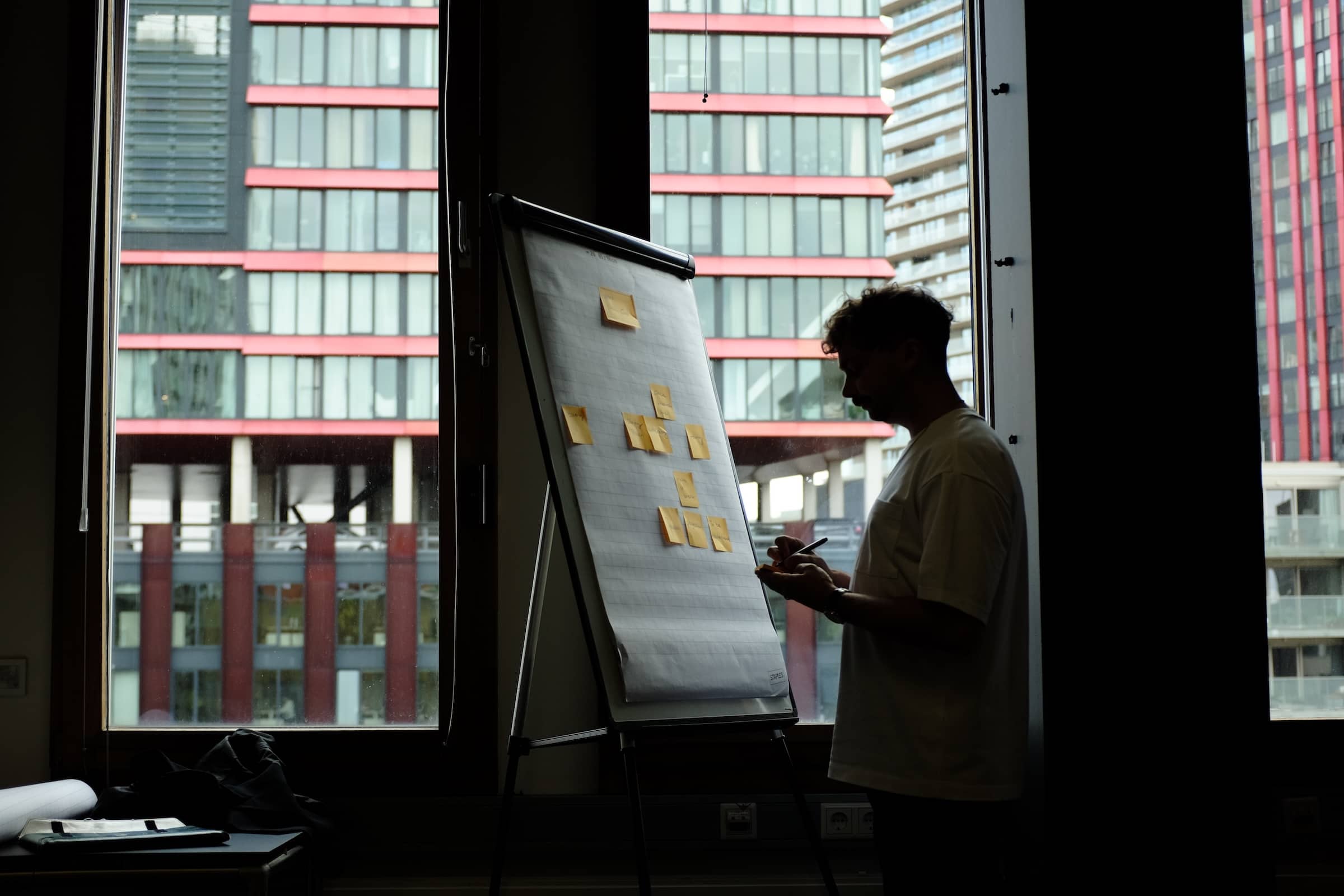
Routines are a collective endeavour. If strategies are to shape day-to-day work, it takes more than top-down communication such as town halls or extensive roadmaps. Instead, involve the people who contributed to the strategy process and let them bring strategic alignment into existing team meetings. Start with just 10 minutes. Like Atomic Habits – but for organisations.
Record, Reflect, Recalibrate:
Those 10 minutes can follow a simple framework:
Record whether strategic intentions showed up in day-to-day actions.
Reflect on what worked well and what created friction.
Recalibrate the actions needed for the upcoming working period.
This keeps strategies connected to reality instead of vision only.
Keep it running:
Routines require care and attention. Encourage teams to keep the new alignment practice for at least 3-5 meetings, then reflect on and recalibrate the routine collectively. Without this persistence, teams slide back into old patterns – as we all know from New Year’s resolutions.
Routinising helps to bring strategies to life
Strategies come to life when they stop living in presentations and start living in people’s calendars, conversations, and decisions. At For Planet Strategy Lab, we call this ‘Routinising’: translating strategic intent into recurrent patterns of action.
Identifying the daily or weekly routines that must be updated with these actions is therefore key to ensuring that strategies become “how we work around here”.
Further Inspirations
Clear, J. (2018). Atomic Habits. Tiny Changes, Remarkable Results. An Easy & Proven Way to Build Good Habits & Break Bad Ones. Cornerstone Press.
Feldman, M. S., & Pentland, B. T. (2003). Reconceptualizing Organizational Routines as a Source of Flexibility and Change. Administrative Science Quarterly, 48(1), 94-118.
Grand, S. (2016). Routines, strategies and management: Engaging for recurrent
creation “at the edge.” Edward Elgar Publishing.
Grand, S., & Bartl, D. (2019). Chapter 6 Making New Strategic Moves Possible: How Executive Management Enacts Strategizing Routines to Strengthen Entrepreneurial Agility. In M. S. Feldman, L. D’Aderio, K. Dittrich, & P. Jarzabkowski (Eds.), Research in the Sociology of Organizations (Vol. 61, pp. 123–151). Emerald Publishing Limited.
Schwendener, A. (2025). Artists as Managers and Strategists: A Routine Dynamics Perspective on Creation Routines within Temporary Projects. Dissertation. University of St.Gallen.