
Mapping
A fundamental error in strategy is to think that your strategy is a map that shows you where your organisation needs to go. This assumes that the world is a stable environment that you simply need to navigate.
A fundamental error in strategy is to think that your strategy is a map that shows you where your organisation needs to go. This assumes that the world is a stable environment that you simply need to navigate.
But today’s world is increasingly unpredictable. This means that your role as a strategist is not to read an existing map, but to draw the map yourself as you head into the unknown. Like early explorers, you don’t know exactly what comes around the next bend – but you do need to orient yourself, especially if you want others to follow you.
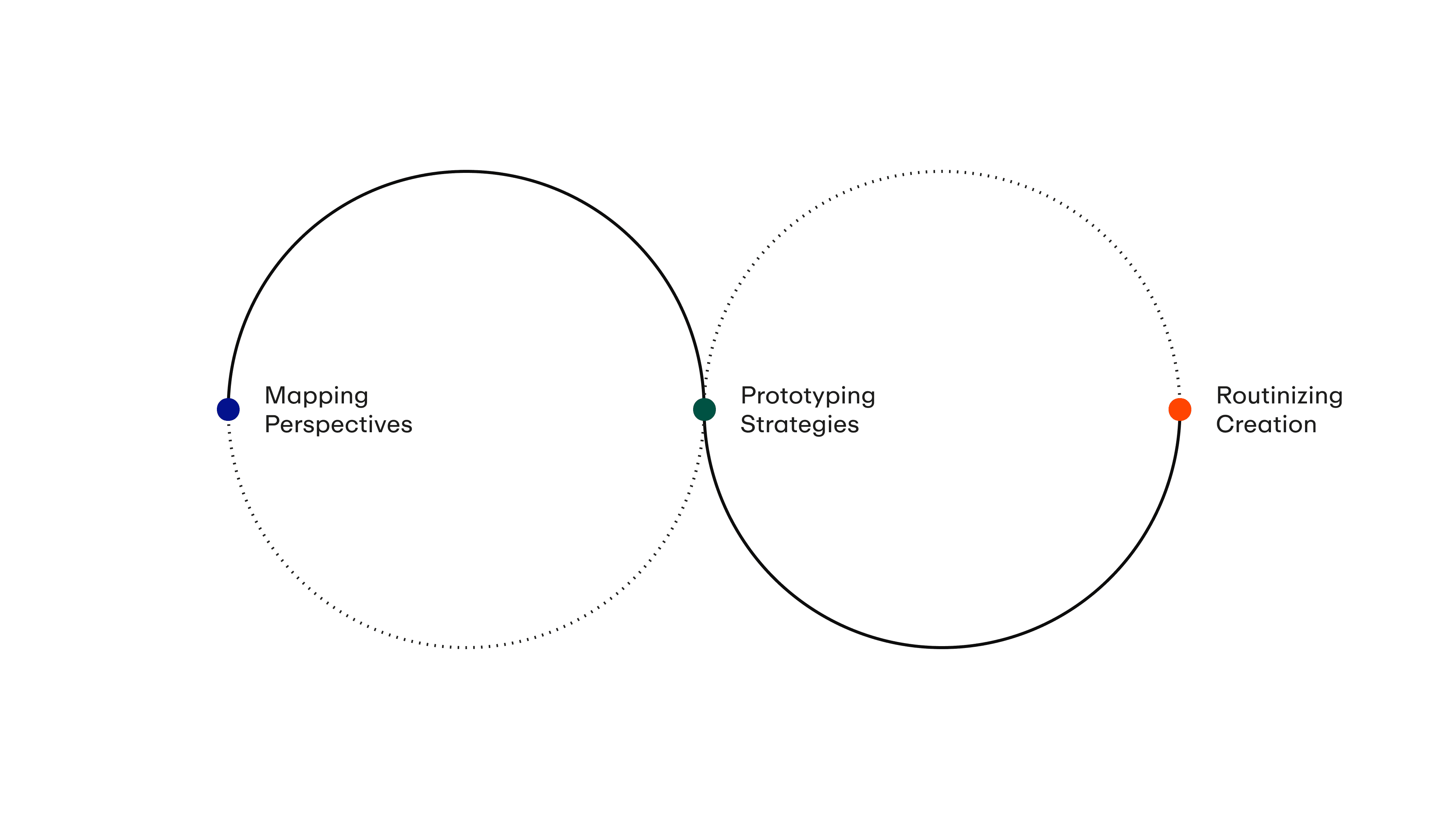
A map shows you where to go when the environment is stable.
Mapping is a skill that allows you to find your way when it is not.
That’s why you need to learn the skill of mapping. This means identifying the relevant connections in your environment – opportunity areas, capabilities, stakeholders, and risks. This also means making sense of the different perspectives within your organisation, and negotiating which ones are important enough to put on the map.
But for mapping to work, you also need a compass. Without a compass, you won’t know whether you’re headed north or south. In organisations, this means you need to identify a system that tells you what is important as you move forward.
Maps tell you what is.
A compass tells you what matters.
We call this compass an organisation’s value principles – the values as the normative elements holding an organisation together and the principles that translate this into a corresponding guide of conduct. These value principles serve as a compass when you learn to map unknown terrain.
That’s why we begin our strategy processes with mapping your organisation and it’s context. We see this as a collective sensemaking process, that lays the groundwork for your strategy work.

Author