We live in an age of disruptions: rapid advances in AI and automation that society and regulations struggle to keep up with; the unravelling of the US-led hegemonic order that is leading to geopolitical uncertainty; and demographic imbalances that put governments under strain.
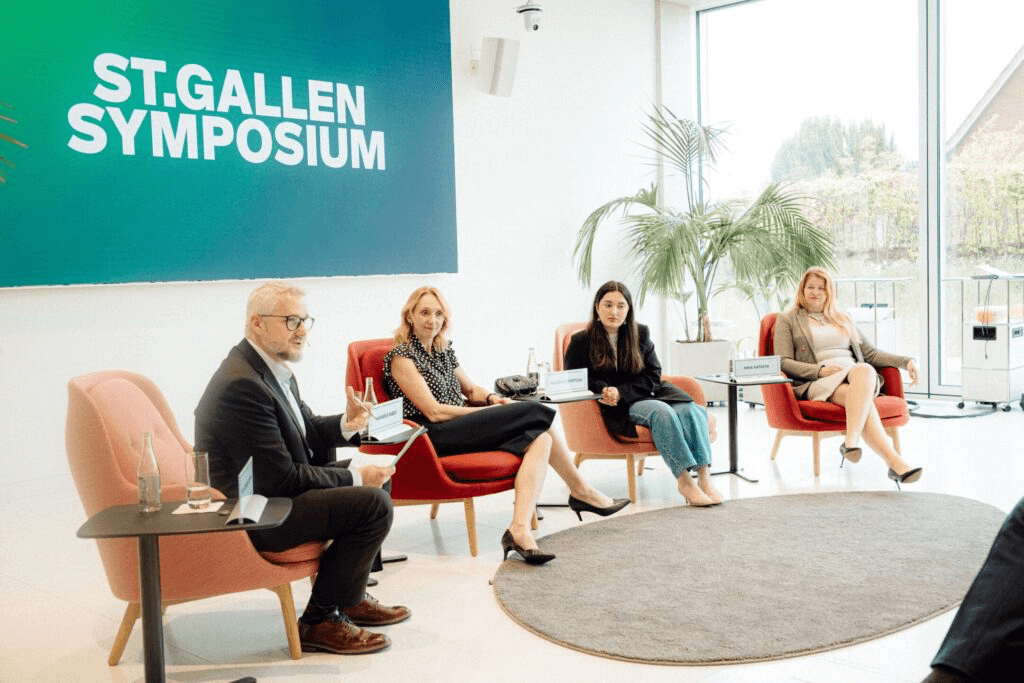
‘Disrupted Age’ was, fittingly, the theme of the 55th St. Gallen Symposium, a large annual conference that brings together business leaders, politicians, and the next generation from around the world.
The program was wide-ranging, from the role of media in shaping narratives, over Europe and its innovative capacity, to mental health in an always-on world. The controversial inclusion of an alt-right blogger raised concerns about how to defend the values of liberal democracy against reactionary movements.
The disruption narrative
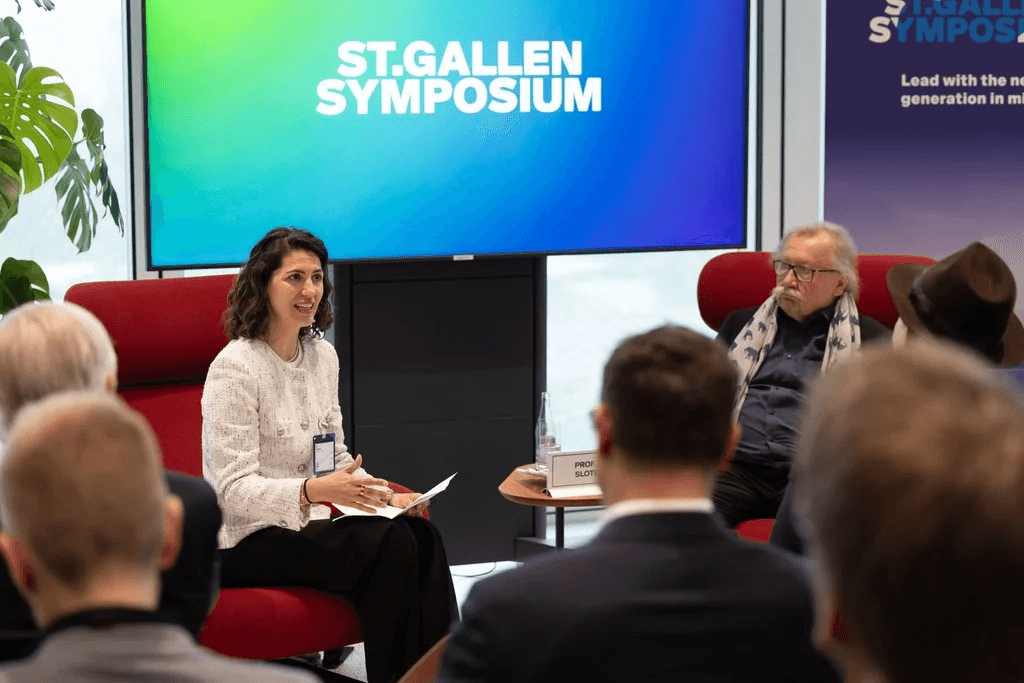
For us, philosopher Peter Sloterdijk’s discussion of the future of liberal democracy resonated more. His argument for democracy’s survival was that it depends on the capacity to recognize dangerous narratives for what they are. He argued that disruption is such a dangerous narrative.
In this view, disruption is not just a description of the world. It is a story we tell about it. And that story puts a premium on speed, immense growth, breakage, and reinvention. It picks up the Silicon Valley ethos of ‘Move fast and break things’. In that framing, slowness is a failure.
(©Images by St. Gallen Symposium via www.unisg.ch)
The quality of discernment in a disrupted age
We think that since everyone is already looking at how to be faster, it is worth considering another question too. What if the more interesting strategic question right now is not how do we move faster? But: where do we want to move towards? And why?
Strategies need to do two things at once: keep up in a disrupted age, and envision a different one. The disruption narrative captures the first but crowds out the second. The skill we think matters most right now is discernment: deciding where you want to go.
Only then can you evaluate where you need to move fast and break things, and where it is worth slowing down for repair.
Record – Reflect – Recalibrate
This is easier said than done. The pressure to move fast is real, and constant. Which is why, in our work, we deliberately build in moments to stop and ask: where are we actually going, and is it still where we want to go?
Our Record – Reflect – Recalibrate approach helps us to do this. We record what we tried, reflect honestly on what worked and what didn't, and recalibrate accordingly. It’s how we routinise staying honest with ourselves, and bringing the strategy to life.
In a disrupted age, that capacity for discernment, by recording, reflecting, and recalibrating, helps us to move forward - strategically.